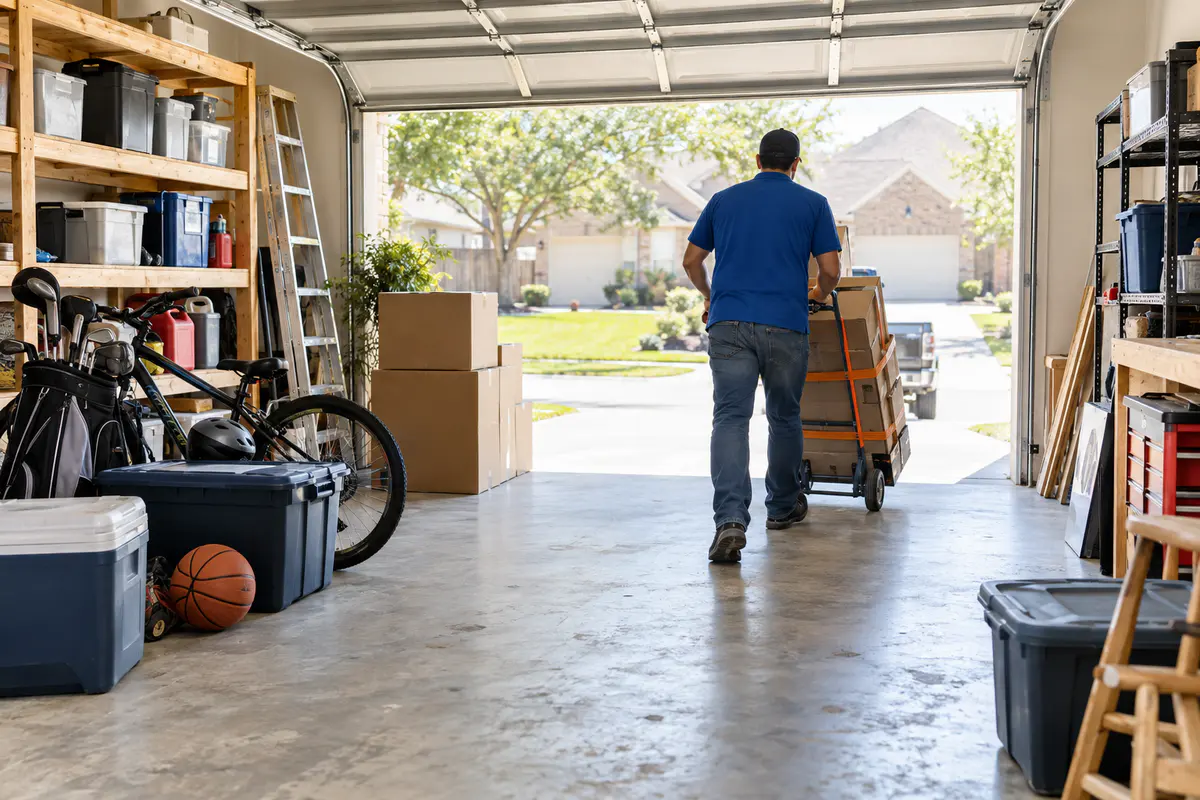
A garage cleanout needs three zones before loading begins: keep, ordinary haul-away, and hazardous or unknown material. The third group matters because paint, fuel, pesticides, oils, batteries, and unidentified liquids should not be mixed with household contents.
Make a keep zone that cannot be mistaken
Use the driveway, a closed side of the garage, or a vehicle for items that stay. Keep tool cases with their chargers and hardware. Put loose fasteners in a container instead of leaving them on shelves where they can be swept into a box.
Group ordinary removal items by how they move
Boxes and small household goods can be staged together. Furniture, shelving, exercise equipment, and bulky pieces need their own path. Empty cabinets and drawers. Do not stack loose material in front of a heavy item that must leave first.
Isolate hazardous and unknown material
Keep original labels visible and never combine liquids. Do not open swollen, leaking, or corroded containers to identify them. Local household hazardous-waste programs set their own residency, quantity, and appointment rules, so check the responsible city or county program before transport.
| Group | Examples | Next action |
|---|---|---|
| Keep | Tools, seasonal gear, vehicle supplies | Move to a protected zone |
| Ordinary haul | Furniture, empty boxes, nonhazardous clutter | Confirm in the cleanout scope |
| Special handling | Fuel, paint, pesticides, batteries, unknown liquids | Use the appropriate approved program |
Protect the loading route
Move vehicles, unlock the side gate, and clear a path wide enough for a hand truck. Tell the crew about overhead storage, unstable shelving, broken glass, or animal access before anyone begins carrying.
For help with eligible contents, see what is covered in a garage cleanout and call with photos of the floor area, shelves, and loading path.